

The real emotions
are those we can share
What is my objective? To offer an excellent product,
a limited edition and to share my passion for the culture of Italian Wine.
For generations my family has produced wine: my grandfather Attilio had a vineyard and was a winemaker and the other grandfather Giulio
was an agrarian professor at the University of Brescia.
Marco Bruciamonti
1936:
We have a great history


1967
Today
both in Italy and abroad.

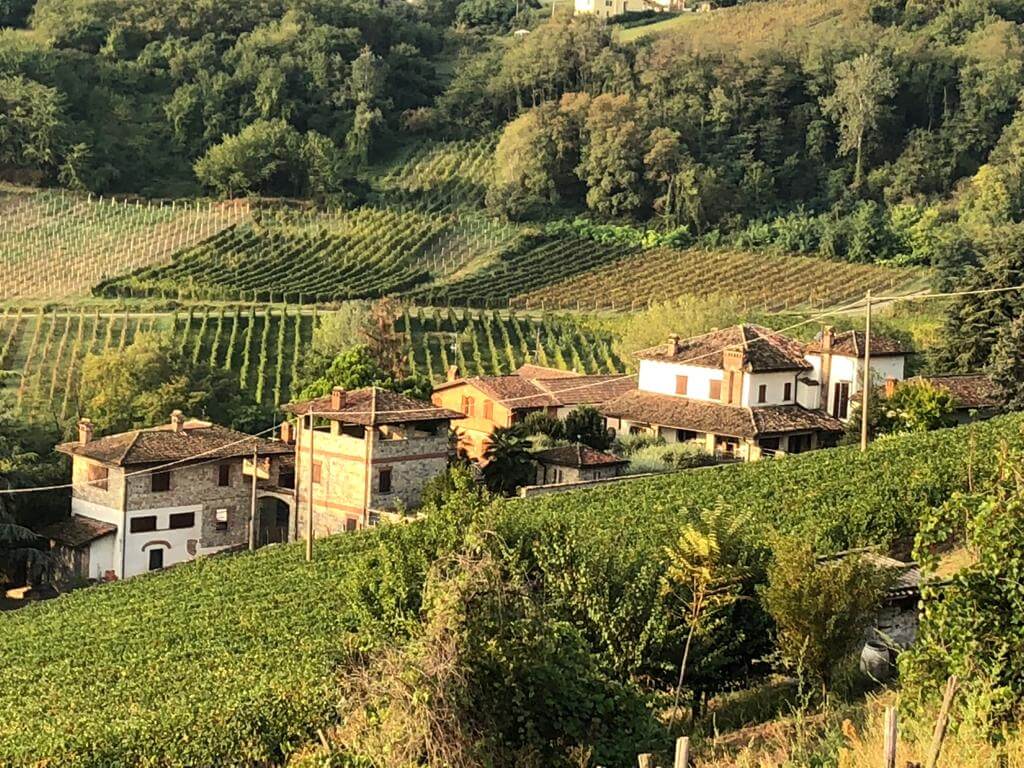
We are in the Oltrepò Pavese,
in an area shaped like
a bunch of grapes.

Passing through the Oltrepò Pavese, we are in the year 40 BC, the Greek historian Strabone praises the good wine, the hospitable people and the large wooden barrels, effectively attributing their introduction to local artisans.
The fall of the empire and the barbarian devastations also had a serious impact on viticulture, which was recovered in the Middle Ages by a group of monks who during their pilgrimages had stopped for a few years in Burgundy before settling in these lands.
The most recent history of the wine-growing Oltrepò dates back to the 19th century and the renewal of the entire sector after the phylloxera: a disastrous event which, however, was the trigger for a revolution in the name of quality with the introduction of new vineyard management criteria and facilities.
Thus begins the most current and exciting history of Oltrepò Pavese wines in the name of production excellence and the ability to fascinate an increasingly international audience.
The cultural identity
of a territory in every glass.

At Tenuta Costera we cultivate and maintain our vineyards, drawing inspiration from the rhythms and methods of rural tradition. With the same respect for the raw material and the authenticity of the product we make wine in our cellar to offer an excellent wine, a perfect expression of the character of our territory.
After all, the objective was not that of large numbers or price competition, but that of producing for oneself and for a few lucky recipients.

Limited production,
unlimited respect.

Our direction is that of a production that is absolutely respectful of the territory and attentive to the environment which limits any treatment of non-natural origin.
Tenuta Costera offers a limited production and during the whole process, from vineyard maintenance to the wine cellar, it adopts procedures that make it an exclusive product.
Today, the priority of health influences all our choices, including food, moving towards sustainable and responsible consumption represents a cultural fact that adds value to the quality of life.
A plastic free vineyard.

At Tenuta Costera, for example, we have created a program to limit the use of plastic and to use work tools and accessories in natural and recyclable materials, to respect our product and the environment.
Even for the harvest, which takes place entirely manually to guarantee the integrity of the grapes, wicker baskets are used which allow the product to breathe as in ancient customs.
La qualità ricercata per i nostri vini, del resto, non è compatibile con i sistemi automatizzati che dimezzerebbero i tempi della raccolta: ritmi naturali, assenza di fretta, lavoro accurato, fanno parte della qualità ed esclusività dei nostri prodotti.
Vogliamo proporvi un vino vero, che sia il frutto dell’ambiente,
di un territorio unico, della sapienza delle nostre mani e dei ritmi delle stagioni.
Tenuta Costera:

Anyone who has the privilege of having a piece of land, whether large or small, must commit to using it for the benefit of the entire eco-system. A duty that we feel is ours and that we try to implement in this very small portion of the planet that is our estate.
Sustainability is no longer an option but the only possible choice. At Tenuta Costera we have chosen to plant olive trees with the aim of creating a microclimate suitable for the repopulation of bees, on which the pollination of approximately 70% of all plant species depend and which have an active role in maintaining biodiversity.